Discounted MRI Scans
MRI - Magnetic Resonance Imaging
Magnetic Resonance Imaging, commonly called MRI, uses a strong magnetic field and radio waves to create detailed images of the inside of your body. MRI is particularly useful for examining soft tissues and does not use X-ray radiation.
Available At
What does an MRI examine?
MRI can be used to examine many areas of the body, including the brain, spine, joints, muscles, tendons, abdomen, pelvis and blood vessels. It can provide detailed images of soft tissues that may not be seen as clearly with other types of imaging.
Why might I need an MRI?
Your doctor may refer you for an MRI to investigate pain, injury, weakness, numbness, headaches, neurological symptoms or changes affecting an organ or joint. MRI can also be used to further investigate something seen on another scan, plan treatment or monitor an existing condition.
What can I expect?
Before your scan, you will complete a detailed MRI safety questionnaire. You may need to change into a gown and remove jewellery, hearing aids, removable dental items and other metal objects.
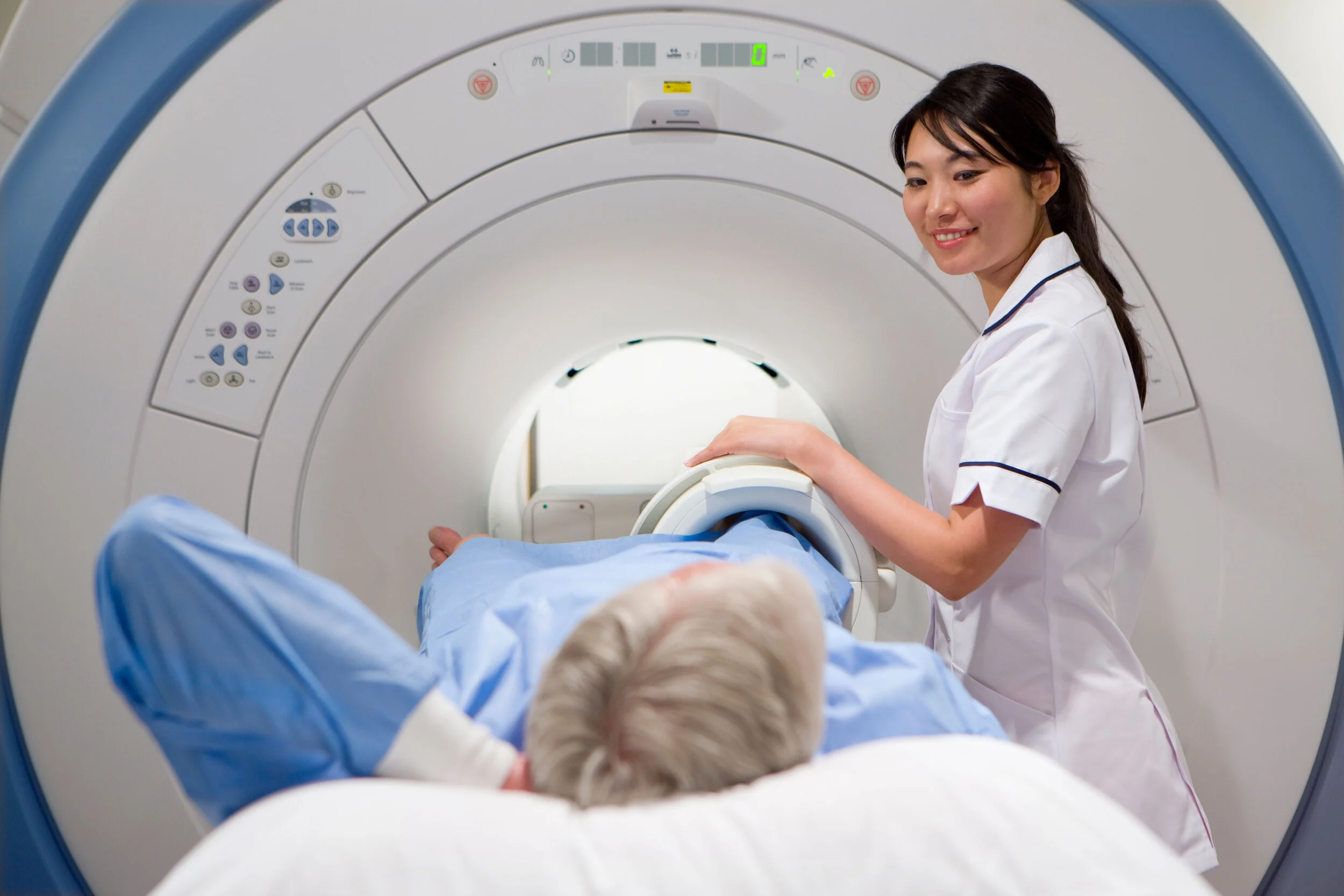
During the scan, you will lie on a table that moves into the MRI scanner. The scanner makes loud knocking and tapping sounds while the images are being taken, so you will be given hearing protection. You will need to keep very still and may be asked to hold your breath for short periods.
You will be able to communicate with the MRI technologist throughout the examination. Depending on the area being examined, a small device called a coil may be placed around or near the part of your body being scanned.
How should I prepare?
Preparation depends on the type of MRI you are having. You may be asked to avoid eating for a period, drink water or follow specific medication instructions. Please follow the preparation information provided when your appointment is booked.
It is important to tell our team before your appointment if you have a pacemaker, implanted medical device, surgical clips, metal fragments, previous surgery, kidney problems, allergies, or if you are pregnant or think you may be pregnant. Please provide any implant cards or device information you have available.
Benefits of MRI
MRI provides detailed images of soft tissues without using X-ray radiation. It can help your doctor make a diagnosis, plan treatment and monitor changes over time.
FAQs
-
No. MRI uses a strong magnetic field and radio waves to create images and does not use X-ray radiation.
-
Some implants and devices are safe under specific MRI conditions, while others require further assessment or may not be suitable. Please contact our team before your appointment and provide the exact device or implant details.
-
Please let us know when booking if you are worried about confined spaces. Our team can explain what to expect and discuss the options that may be available for your examinatio
-
Not every MRI requires contrast. If contrast is needed, a gadolinium-based contrast agent is usually given through a small cannula in a vein to help certain tissues or blood vessels show more clearly.
-
Most MRI examinations take between 20 and 60 minutes. The time varies depending on the area being examined and the number of images required.